Australian Transport Safety Bureau Press Release | February 26, 2021
Estimated reading time 6 minutes, 31 seconds.
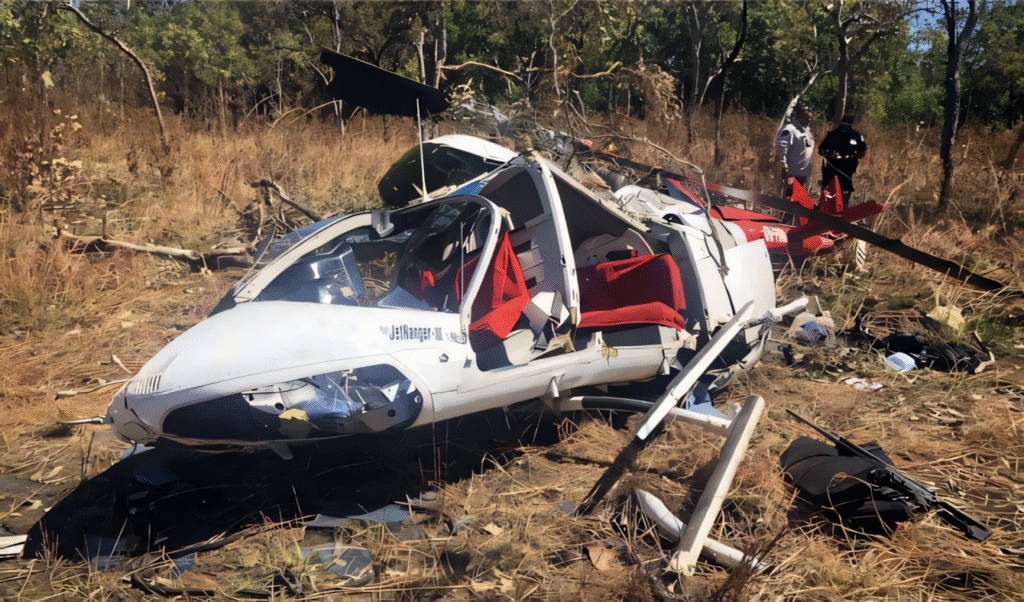
All three occupants of the Bell JetRanger were seriously injured in the May 2019 accident. ATSB Photo
Aviation investigators say a terrifying helicopter crash during a feral animal culling mission in Kakadu National Park could have been prevented — if a simple maintenance check had been done.
The Australian Transport Safety Bureau (ATSB) has released its findings after a Bell JetRanger helicopter slammed into the ground on May 21, 2019, seriously injuring all three people on board during a low-level aerial shooting operation. The mission involved a pilot, a shooter, and a spotter—experienced Kakadu National Park rangers—working under Jayrow Helicopters on contract to the Director of National Parks (DNP).
The team was flying just 50 feet above the rugged Northern Territory landscape, tracking a mob of feral horses, when disaster struck. The pilot reported a sudden deceleration of the engine to idle, while the spotter recalled hearing an alarming surge. With almost no time to react, the pilot checked the throttle—it was already fully open—and realized they were experiencing a genuine emergency.
Scanning the terrain for a survivable landing spot, the pilot aimed for a small clearing. But as he maneuvered the failing aircraft forward, the JetRanger clipped a tree on the right side and hit the ground hard. The helicopter was destroyed, and all three crew members suffered serious injuries.
Investigators later discovered the cause: a loose union on an engine reference air line, creating a leak that robbed the engine of vital power. The fault stemmed from maintenance performed just four days earlier. The union—located downstream of the work done—had not been checked for tightness, and an independent inspection, which should have confirmed the installation of a power turbine governor, was likely never carried out. Paperwork systems also failed to detect the missing inspection.
“This accident makes one thing very clear,” said ATSB Director of Transport Safety Dr. Mike Walker. “Maintenance errors can have devastating consequences, and independent inspections are essential safeguards. A simple visual check is not always enough to catch a critical issue.”
The investigation also revealed troubling issues inside the cabin. Despite requirements from the DNP that shooters and spotters wear helmets, helmets were not routinely supplied or used. Several cabin-safety shortcomings ultimately worsened the injuries sustained during the crash.
Additional safety gaps were identified in Civil Aviation Safety Authority (CASA) approvals, including vague wording around the use of harnesses and the renewal of aerial platform shooting permissions without updated emergency training.
“The Director of National Parks failed to actively manage the risks of aerial culling operations,” Dr. Walker noted. “Major changes—such as increasing crew size and switching helicopter types—were made without proper oversight, exposing staff to unnecessary danger.”
In response, the helicopter operator conducted an immediate fleet-wide inspection of all reference air lines and reinforced training for crew on the dangers of using only a harness instead of a seat belt. The maintenance organization also strengthened its human-factors training by bringing in an external provider.
CASA has since planned actions to clarify harness regulations and ensure that task specialists receive mandatory emergency and operational training.
After the crash, the DNP suspended all aerial culling activities. By December 2019, it launched a full review of its safety standards, reaffirmed its helmet requirement, and commissioned an aviation safety specialist to examine its entire aerial culling program. A broader review of its risk-management approach is also underway.
“This investigation underscores a crucial message,” Dr. Walker said. “Any organization sending its staff into high-risk aviation environments must seek expert guidance, rigorously manage hazards, and provide the right gear. Lives depend on it.”